

Zac Schaller is a Masters-level Occupational Therapist in practice with Teton Therapy since 2021.
Widely considered Fremont County’s (WY) expert in outpatient shoulder rehabilitation, he is now practicing full-time at Teton Therapy’s Lander clinic. His guides to shoulder issues and rehabilitation are a weekly feature on TetonTherapypc.com.
What to Expect After a Rotator Cuff Repair: An OT’s Guide to Recovery
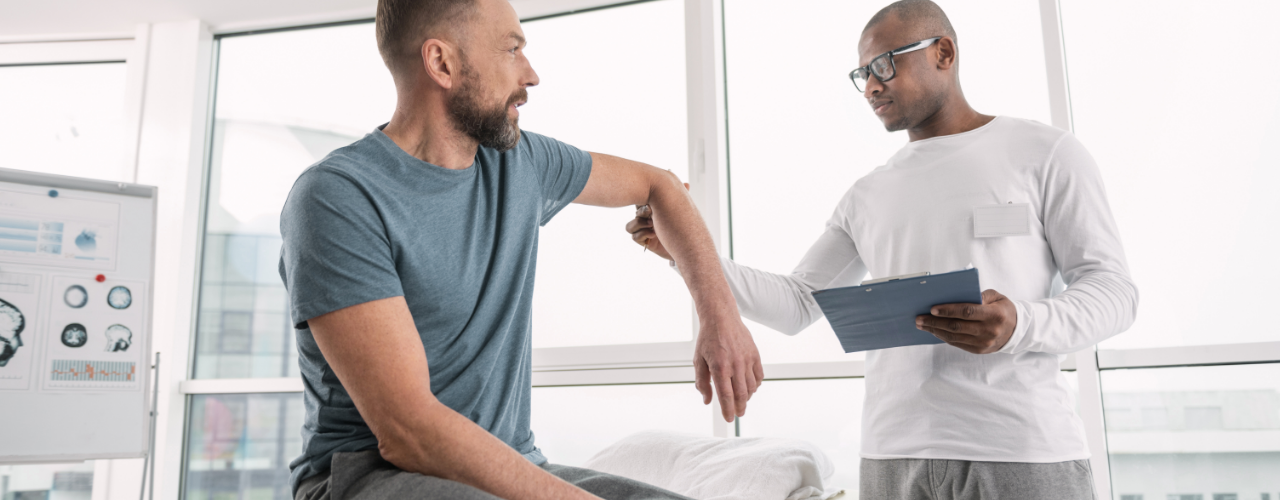
If you’re preparing for a rotator cuff repair, you may be feeling a mix of hope, uncertainty, and even a little anxiety. As an Occupational Therapist, and an individual who has undergone shoulder surgery myself, I can certainly relate to these feelings. I also work with many patients moving through this exact process; from the first days in a shoulder sling to the moment they return to the daily activities they love.
This blog will walk you through what to expect after a rotator cuff repair, a general timeline for recovery, how therapy fits into each stage of recovery, and how your occupational therapist will help set you up for a smooth, successful recovery.
Understanding Your Rotator Cuff Repair
Your rotator cuff is a group of four muscles and their tendons that connect them to your arm bone (humerus) in your shoulder. These muscles help keep your shoulder stable and allow you to move your arm in many directions. Surgery is typically recommended when there’s a significant tear that isn’t improving with conservative care.
After the repair, your shoulder will require protected, gradual healing. This means recovery is more of a marathon, not a sprint. However, with the help of your therapist you will be able to develop the appropriate plan and consistency in order to regain strength, mobility, and function in your shoulder.
The Recovery Timeline: What You Can Expect
Note: Post-op protocols can vary from surgeon to surgeon and based on the size and/or severity of the tear. Most recoveries following a rotator cuff repair follow these general phases.
Phase 1: Protection & Pain Management (Generally Week 0–6, but may vary depending on size of the tear)
Your goals during this stage:
- Protect the surgical repair
- Manage pain and swelling
- Maintain mobility in your elbow, wrist, and hand
- Begin passive range of motion (your therapist moving your shoulder) ONLY as prescribed. Larger or more severe tears will require a longer delay before beginning passive motion.
- Begin active-assisted (assisted with another force—i.e., your non-surgical arm) range of motion as prescribed
Precautions (length of time will depend on size of tear):
- Do not actively move your surgical arm
- No weight bearing through your surgical arm
- No active range of motion of the shoulder
- No reaching overhead or behind back
- No pushing or pulling
What this phase feels like:
You’ll likely be wearing a sling which may or may not include an abduction pillow (pillow that attaches to your sling to keep your elbow away from your side) most of the time. This can be removed to shower and occasionally throughout the day if you are seated, not doing anything active. Sleeping can be tricky at this time as many patients find comfort propping themselves up with pillows or sleeping in a recliner. It’s normal to need help with dressing, bathing, and household tasks during this phase.
How OT helps:
- Education: As occupational therapists we will provide you with early education regarding the general anatomy of the shoulder and rotator cuff so you can better understand the specific surgical procedure you underwent. We will also discuss the specific precautions or things to avoid given your specific repair, the timeline in which we will be progressing through each phase of recovery, and appropriate home exercises to complete in order to make the protection and management phase more manageable.
- Gentle passive range-of-motion (PROM) exercises
- Strategies for safe dressing and bathing
- Pain management techniques (heat, pacing, positioning)
- Adaptations to make daily tasks easier
Phase 2: Controlled Mobility (Generally Weeks 6–12)
Your goals during this stage:
- Maintain motion through the shoulder with passive range of motion and active assisted range of motion
- Safely increase shoulder active range of motion—using your own muscles
- Reduce stiffness
- Begin using your arm for light daily tasks (within your surgeon’s guidelines)
- Begin early strengthening as indicated
What this phase feels like:
You’ll gradually come out of the sling, usually around week 6 depending on the repair. This is a huge milestone! Most patients will continue to notice stiffness or feel nervous about moving their arm. However, range of motion should continue to improve and feel easier in this phase. Early strengthening should begin during this phase. Timing will depend on the severity or size of your initial tear.
How OT helps:
- We will continue to educate you and provide specific exercises to maintain both passive and active assisted range of motion. This will likely include progressive updates to your home exercise program.
- Guided exercises to improve mobility
- Guided exercises to improve strength
- Gentle stretching
- Posture training to reduce shoulder strain
- Continued education on safe movements
Phase 3: Strengthening (Months 3–6)
Your goals:
- Continue to build strength in the rotator cuff and muscles supporting the shoulder blade
- Improve endurance for daily tasks
- Begin returning to functional activities
What this phase feels like:
You’ll finally feel more like yourself again. Lifting light objects, reaching overhead, and daily chores should become more manageable. However, you are likely to experience continued fatigue and mild soreness in the shoulder through this phase.
How OT helps:
- Progressive shoulder and scapular strengthening
- Training for work, home, and recreational activities
- Techniques to prevent reinjury
Phase 4: Return to Full Activity (Months 6–12+)
Your goals:
- Restore full shoulder strength
- Return to sports, heavy lifting, or work demands
- Move confidently and without fear of reinjury
What this phase feels like:
Your shoulder continues to get stronger and more coordinated. Many people feel almost back to normal around 6–9 months following surgery, though full healing of the surgical site may take up to a full year.
Tips for a Successful Recovery
- Be consistent with your therapy program Consistency is the key to regaining full movement and strength.
- Don’t push through sharp pain Mild soreness is expected, but sharp pain is a warning sign and could set you back.
- Use good posture Slouching or rounding your shoulders can increase strain on your shoulder.
- Ask for help from others when you need it Tasks like laundry, cooking, or reaching into cabinets may be challenging early on.
- Be patient Rotator cuff repair recovery is gradual. Celebrate your progress during each phase of recovery. Even small gains matter!
Final Thoughts
A rotator cuff repair is a big step toward improving your shoulder function and overall quality of life. While recovery takes time, you won’t be alone during the journey. As your Occupational Therapist, my goal is to help you move through this process safely, confidently, and with the knowledge you need to succeed.
If you’re preparing for surgery or have questions about the rehab process, don’t hesitate to reach out! We are here to help guide you every step of the way. Schedule a free consultation with one of our OT’s to get more detailed information regarding your own specific shoulder!