If you’ve noticed your shoulder gradually becoming more painful and stiff, possibly to the point where simple activities like brushing your hair or reaching into a cabinet feel difficult, you may be dealing with a frozen shoulder.
While treatable, this condition is considered one of the more challenging shoulder issues because the loss of motion can progress very slowly and impact your ability to move comfortably throughout the day. Even day-to-day activities that once felt automatic may start to require extra effort and patience, which is why treatment for this condition is so important.
As an occupational therapist, I help patients regain functional use of their shoulder every day. With the right treatment approach, you can get back to doing what you love.
What Is Frozen Shoulder?
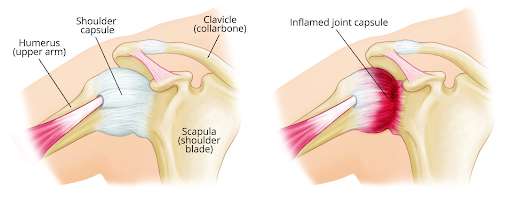
Frozen shoulder, also called adhesive capsulitis, is when your shoulder gets very stiff and painful. It occurs when the capsule and tissues around your shoulder joint get tight and thick, sometimes forming adhesions or stiff bands of tissue, making it hard to move your arm and your shoulder blade.
Common symptoms include:
- Sharp pain with movement
- Increasing stiffness over time
- Trouble reaching behind your back, dressing, or lifting overhead
- Pain that worsens at night or interrupts sleep
Why Does Frozen Shoulder Happen?
The exact cause isn’t always clear. However, frozen shoulder is more likely to affect individuals after an injury or surgery involving the shoulder. It’s even more likely to affect you if you haven’t used your shoulder for a longer period of time. This lack of movement contributes to the inflammation and thickening of the capsule and tissues around the shoulder joint.
Other factors that increase the risk of frozen shoulder include:
- Shoulder immobilization after surgery, injury, or fracture
- Inflammation from rotator cuff problems or bursitis
- Medical conditions such as diabetes or thyroid disorders
- Most common in those ages 40–65 and more common in females
- Having frozen shoulder previously, even in the opposing arm
Phases of Frozen Shoulder
Frozen shoulder usually progresses through three phases, each lasting weeks to months:
- Phase 1: Freezing Phase (painful stage) – Pain increases and range of motion decreases
- Phase 2: Frozen Phase (adhesive stage) – Pain eases, but stiffness remains
- Phase 3: Thawing Phase (recovery stage) – Range of motion slowly improves
Recovery can take time, especially in severe cases, and can range from 9 months to 3 years. Progress may seem slow at first, but staying consistent with therapy and home exercises makes a big difference.
How Occupational Therapy Can Help
The good news is that a frozen shoulder will get better over time, and therapy is one of the most important parts of recovery.
As an OT, I can help minimize phases 1–2 of your frozen shoulder and move you toward phase 3 as efficiently as possible. My focus is to help you regain the movement, function, and strength needed for everyday tasks while keeping the shoulder protected through the following:
Pain Management Strategies
- Recommend use of heat or electrical stimulation to safely increase blood flow, relax tight muscles, and improve comfort
- Teach you optimal positioning strategies to use throughout the day and for more comfortable, supported sleep
- Educate you on activity pacing and rest strategies to help prevent pain flare-ups while staying active
Task and Activity Modifications
- Teach you how to modify and adapt daily activities while remaining independent
- Educate you on how to avoid motions that “pinch” or increase symptoms
- Show you safer and more efficient ways to reach, dress, bathe, and complete household tasks
Gentle Progressive Stretching and Mobility Work
- Guide you through gentle, progressive stretches and range of motion to improve flexibility in the shoulder capsule and surrounding muscles
- Teach you how to safely perform mobility work at home to support daily function
- Help you restore movement needed for reaching, bathing, dressing, and grooming tasks
Manual Therapy
- Use hands-on techniques to decrease pain and stiffness
- Perform soft tissue release and joint mobilizations to help restore movement
- Provide passive range of motion techniques to improve shoulder mobility and joint mechanics
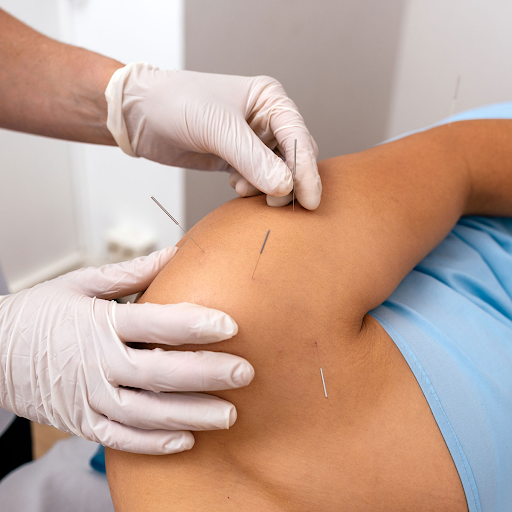
- Dry needling to decrease muscle stiffness, swelling, and improve blood flow to the area
Cupping to increase blood flow to the area
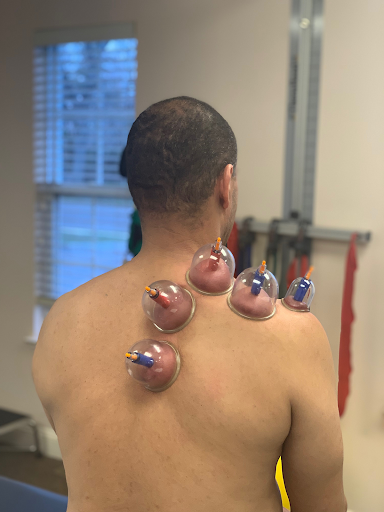
Cupping to increase blood flow to the area
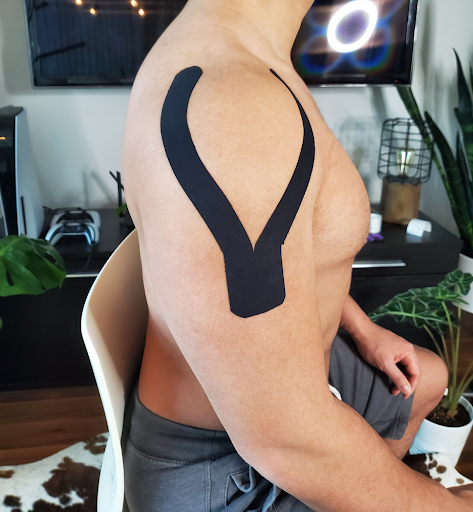
Kinesiology taping to provide support, decrease swelling, and improve circulation
Home Exercise Program (HEP)
- Teach you a customized home exercise program designed to protect your shoulder while improving flexibility
- Progress your program over time to support improved range of motion and strength
- Help you stay consistent and confident with your home program to reduce the length of the frozen phase
In Severe Cases: Medical Intervention May Be Needed
Most cases improve with consistent therapy, but occasionally stiffness remains very limiting even after months of conservative care. In those situations, a physician may recommend one of the following:
- Manipulation Under Anesthesia (MUA): The shoulder is gently moved through a full range of motion while you are asleep to help break up adhesions.
- Arthroscopic Capsular Release: A minimally invasive procedure to release tight portions of the capsule.
After these surgical interventions, occupational therapy is crucial to maintain new motion and prevent stiffness from returning. Rehabilitation typically begins immediately to support safe, gradual gains in shoulder mobility.
When Should You Seek Help from an OT?
Reach out to an OT if you notice:
- Sudden worsening stiffness or pain
- Difficulty with daily activities like reaching or dressing
- Shoulder pain lasting longer than a few weeks
The earlier frozen shoulder is treated, the better the outcome.
Let’s Help You Move Again
Frozen shoulder can feel discouraging due to the lengthy process of recovery, but you are not alone in the journey. With the right plan and support from your occupational therapist, mobility and comfort can return.
If you’re dealing with a frozen shoulder, we can work together to help you regain freedom of movement in order to get back to the activities that matter to you. With guided treatment, consistency, and personalized care, your shoulder can become more comfortable and functional over time. You don’t have to navigate the recovery process alone as support, education, and hands-on care from your therapist can make a substantial difference in your healing.
Teton Therapy Lander-based Occupational Therapist Zac Schaller, MOT, OTR/L is available for free consultations, with full Occupational Therapy departments in all of Teton Therapy’s clinics, statewide.
Call or text to schedule your free Occupational Therapy consultation today!
In Lander, 307-332-2230
In Riverton, 307-857-7074
In Cheyenne, 307-514-9999