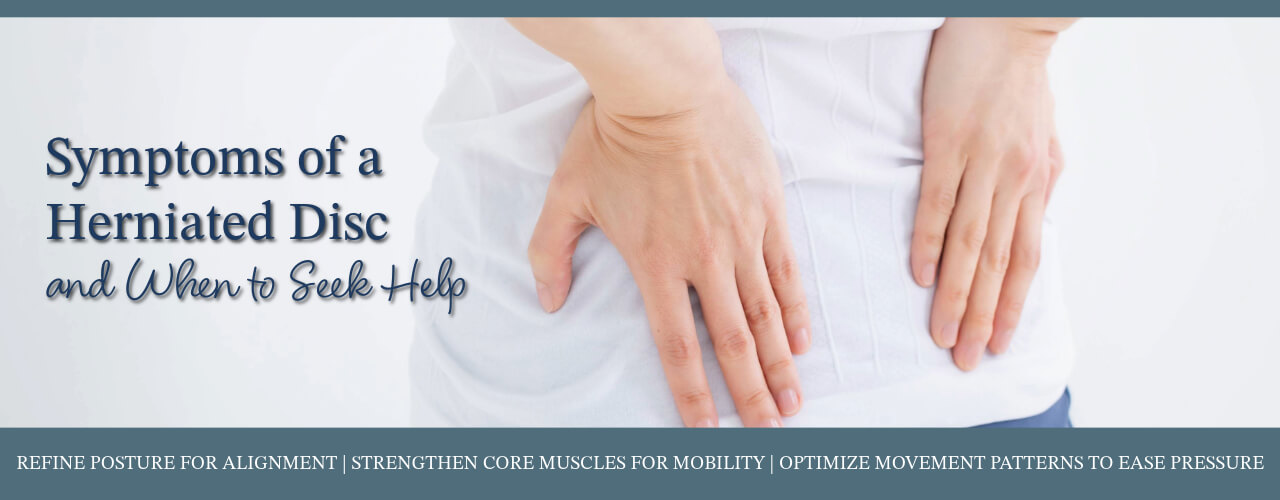
A herniated disc is a common spinal condition that can lead to pain, weakness, and limited mobility. For many people, symptoms develop gradually, while others may experience sudden discomfort after lifting, bending, or twisting. Recognizing herniated disc symptoms early can make a big difference in how quickly and effectively you recover.
A herniated disc can cause pain, numbness, and weakness. Learn the warning signs, risk factors, and when it’s time to take action for better spine health. Physical therapy offers targeted strategies to relieve symptoms, improve posture, and prevent further injury.
What Is a Herniated Disc?
Spinal discs act as cushions between the bones in your spine. When the soft center of a disc pushes through a crack in the tougher exterior, it is called a herniated disc. This can irritate nearby nerves, resulting in pain or dysfunction in the back, neck, or limbs.
Common Herniated Disc Symptoms
People with a herniated disc may experience:
- Sharp or aching pain in the neck or lower back
- Pain that radiates into the arm, shoulder, buttocks, or leg
- Numbness or tingling in hands, arms, feet, or legs
- Muscle weakness, especially during movement or lifting
- Difficulty sitting or standing for long periods
If these symptoms affect your daily life or worsen with time, physical therapy can help guide you toward relief.
How to Manage Herniated Disc Symptoms with Physical Therapy
Physical therapy is one of the most effective non-surgical options for managing herniated disc symptoms. Therapists focus on relieving pressure on spinal nerves, improving flexibility, and building strength to support your spine.
Seven Tips for Managing A Herniated Disc
Here are seven tips and strategies that can help reduce discomfort and restore function.
1. Avoid Prolonged Sitting and Slouching
Remaining in one position, especially with poor posture, increases spinal pressure and can worsen symptoms. Sitting for long periods with a rounded spine often triggers or intensifies pain.
Try This: Sit with your feet flat on the floor, hips higher than your knees, and your back supported. Stand and walk every 30 to 60 minutes.
2. Use Proper Body Mechanics When Lifting
Lifting with poor form is a leading cause of disc herniation and reinjury. Avoid bending forward and twisting at the same time.
Try This: Bend your knees, keep the object close to your body, and lift with your legs while keeping your spine neutral.
3. Incorporate Gentle Mobility Exercises
Stiffness around the spine can increase discomfort. Controlled movements help reduce nerve irritation and encourage circulation.
Try This: Follow the movement program recommended by your physical therapist.
4. Strengthen Your Core Muscles
Strong abdominal and back muscles provide better support for your spine. This reduces pressure on the discs and helps restore balance and stability.
Try This: Include exercises in your therapy plan that focus on deep core muscles and avoid straining the lower back.
5. Modify Activities That Trigger Pain
Activities that involve bending, twisting, or lifting may need to be temporarily adjusted to allow healing. Avoid positions that increase symptoms.
Try This: Keep a journal of movements that cause pain and share this with your physical therapist. They can help you modify those tasks safely.
6. Use Ice or Heat Appropriately
Both ice and heat can offer temporary symptom relief. Ice helps reduce pain, while heat can ease muscle tension once the acute phase subsides.
Try This: Use a cold pack for 15 to 20 minutes during flare-ups. Apply heat before stretching or exercise to loosen muscles.
7. Know When to Seek Professional Help
While mild symptoms may resolve with rest and self-care, persistent or worsening symptoms require professional evaluation.
Try This: If pain, numbness, or weakness persists beyond a few days or begins to interfere with your routine, contact a physical therapist for a comprehensive assessment.
When Herniated Disc Symptoms Need Immediate Attention
Seek prompt care if you experience:
- Loss of bladder or bowel control
- Significant leg weakness
- Numbness in the groin or inner thigh area
These may indicate a more serious condition and require medical attention.
Let Teton Therapy Help You Take Control of Your Spine Health
If you are noticing herniated disc symptoms, don’t wait for them to progress. Physical therapy can help manage pain, improve function, and prevent future injury.
Contact Teton Therapy today to schedule a personalized evaluation. Our team is here to help you move with less pain and more confidence.