Written By: Zac Schaller, MOT, OTR-L, Occupational Therapist, Teton Therapy Lander
Despite Steeler’s Player TJ Watt’s Highlighted Injury from Dry Needling: Why it is a Safe and Practiced Intervention
When Steelers player T. J. Watt experienced a collapsed lung following a dry needling session, it understandably caught public attention. Watt developed a pneumothorax, a partially collapsed lung, after dry needling treatment to the upper trunk region. He received prompt medical care, underwent a procedure to address the issue, and has since recovered well. While this complication was serious, it is important to emphasize that this type of adverse event is rare, especially when performed by properly trained clinicians following established safety protocols.
As an occupational therapist, I approach conversations about dry needling with transparency and education. Dry needling is not experimental or casually performed. It is a skilled intervention grounded in modern anatomy and neurophysiology, and when delivered appropriately, it is safe and evidence-based.
What Is Dry Needling?
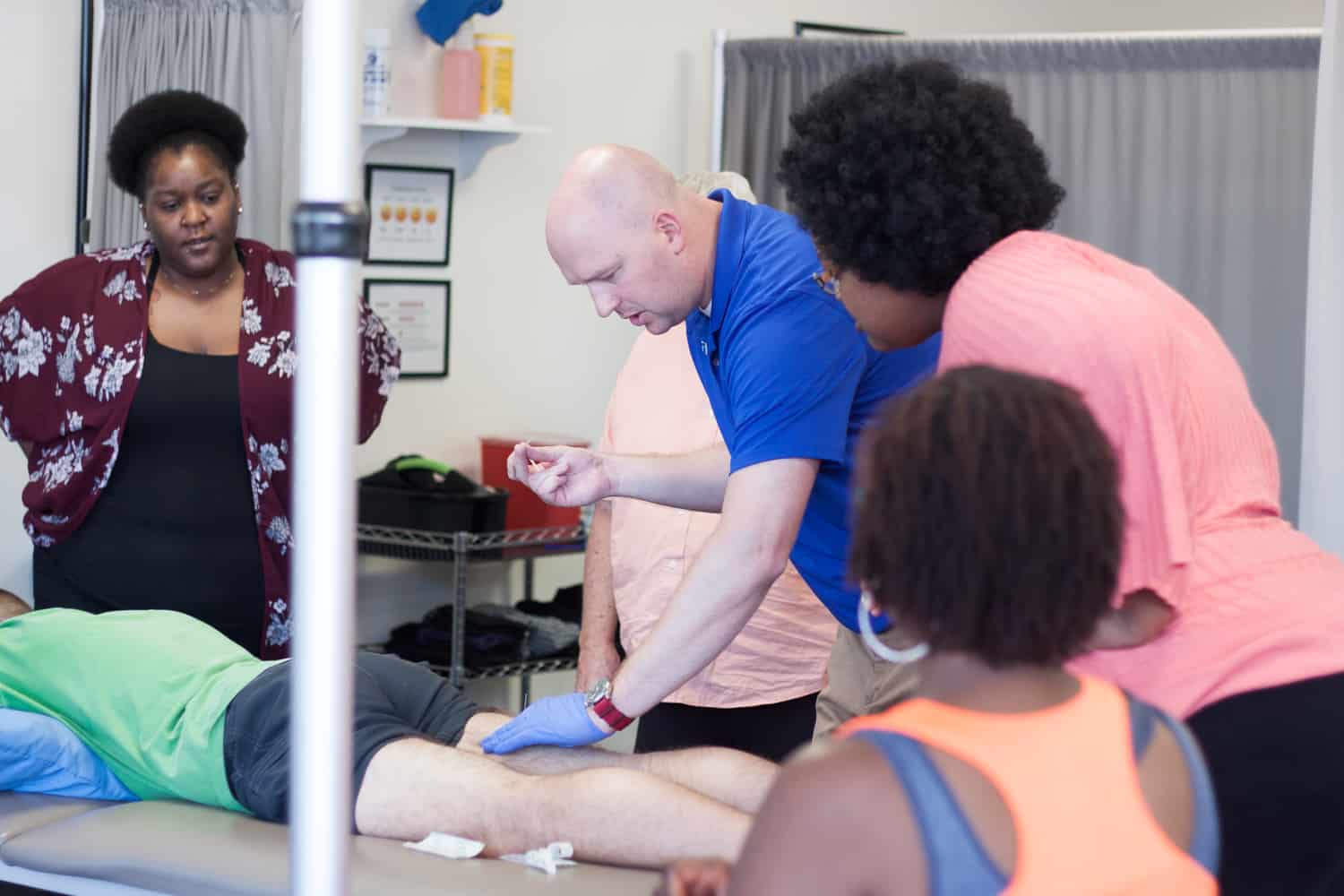
Dry needling uses a thin, sterile, solid monfilament needle inserted into specific muscular trigger points or areas of neuromuscular dysfunction. “Dry” indicates that no medication is injected into the patient. The goal is to reduce muscle tension, decrease pain, improve blood flow, and restore normal movement patterns.
A trigger point is a hyperirritable knot within a muscle that can produce local tenderness and sometimes referred pain, or discomfort, felt in a different location than the source. By stimulating these points, dry needling can interrupt abnormal muscle contraction, encourage relaxation, and initiate a localized healing response.
Physical and Occupational Therapists rarely use dry needling alone. It is typically one component of a comprehensive treatment plan that includes therapeutic exercise, manual therapy, mobility work, and education.
How Does it Differ from Acupuncture?
Dry needling is often confused with acupuncture because both use the same thin needles. However, their foundations differ.
I am not trained specifically in acupuncture, but I always tell my patients that Acupuncture is more systemic in nature while Dry Needling is more specific. Acupuncture, rooted in Chinese medicine, serves to balance energy flow. Dry Needling is based on guided musculoskeletal evaluation, anatomical landmarks, and neuromuscular physiology. The intent is not to alter energy flow but to address specific trigger points that can be contributors to pain and decreased function.
Required Training and Certification
Dry Needling is not typically part of entry-level therapy education. As therapists, we complete advanced post-professional certification courses that include instruction in specific dry needling approaches, anatomy, contraindications, sterile technique, and emergency procedures.
The thoracic region, where the lungs are located, is treated with particular caution. Proper anatomical knowledge, conservative depth selection, and positioning significantly reduce the already low risk of a pneumothorax.
Real but Rare Risks
Similar to injections or IV placement, dry needling carries potential risks. The most common side effects are mild and temporary. They include muscle soreness, minor bruising, and fatigue typically lasting 24–48 hours.
More serious complications, such as infection or pneumothorax, are extremely rare. Evidence and clinical experience suggest that when performed by trained providers using appropriate technique, the incidence of serious adverse events is extremely low.
Case studies have indicated that infections are considered rare, occurring in far fewer than .1% of cases. Serious complications, including pneumothorax, nerve injuries, and infections, occur in less than .01% of cases.
Risk is minimized through:
- Medical screening
- Clear informed consent outlining benefits and risks
- Use of sterile, single-use needles
- Clean technique and proper disposal
- Precise anatomical landmarking
- Ongoing communication during treatment
A Clinical Example
In my practice at Teton Therapy, Dry Needling has been a valuable tool for patients with persistent shoulder pain.
I’ve treated a patient with chronic rotator cuff–related shoulder pain. The patient presented with limited overhead motion, referral pain into the lateral arm, and persistent tightness despite strengthening and manual therapy.
Examination revealed trigger points in muscles of the rotator cuff, as well as the upper trapezius. After screening for contraindications and obtaining informed consent, Dry needling was introduced.
Using sterile, single-use needles and precise anatomical landmarks, I targeted the involved muscles. A brief local twitch response was elicited; a normal reflex indicating disruption of the trigger point. Following treatment, the muscles demonstrated reduced tightness and improved tissue mobility.
The localized microtrauma stimulated a controlled inflammatory response, increasing blood flow and supporting tissue remodeling. The patient experienced mild soreness for about 24 hours, which resolved quickly.
The following visit, improvements were noted including increased range of motion, decreased pain into the arm, and improved strengthening tolerance. As muscle tone normalized and trigger point activity decreased, rehabilitation progressed more effectively.
Throughout treatment, safety protocols were strictly followed: sterile technique, conservative needle depth, clear communication, and monitoring. No adverse events occurred, only predictable, mild soreness.
Putting It in Perspective
High-profile incidents like the one involving T.J. Watt can create concern, but isolated events must be viewed in context. Millions of Dry Needling treatments are performed safely each year by trained clinicians. When serious complications occur, they are rare and typically associated with anatomical proximity to sensitive structures such as the lungs.
The key determinants of safety are proper certification, strong anatomical knowledge, sterile technique, careful screening, and informed consent.
Dry Needling is not appropriate for every patient, nor is it a stand-alone cure. But when integrated into a comprehensive rehabilitation program and performed by properly trained professionals, it remains a responsible option for reducing pain, restoring mobility, and helping patients return to the activities that matter most!
Teton Therapy Occupational Therapist Zac Schaller, MOT, OTR/L is available for free consultations in our Lander, WY location. Teton Therapy offers Occupational Therapy in all of our clinics, statewide.
Call or text to schedule your free Occupational Therapy consultation today!
In Lander, 307-332-2230
In Riverton, 307-857-7074
In Cheyenne, 307-514-9999