If everyday tasks like opening jars, turning doorknobs, or writing with a pen have become frustrating or painful, it could be hand arthritis, a relatively common condition. Fortunately, several occupational therapist tips can help you feel and function better in your day-to-day life.
Multiple types of hand arthritis exist, and they all cause stiffness, pain, and swelling in the small, delicate joints of the hands, especially the fingers and thumbs. While there’s no cure, there are effective ways to manage it.
The Teton Therapy occupational therapists have specialized training to help people with hand arthritis maintain mobility, reduce discomfort, and preserve independence. In this article, we’ll explore some of our favorite occupational therapist tips for reducing pain and improving function.
Try These Occupational Therapist Tips for Hand Arthritis Relief
1. Use Larger, Ergonomic Tools at Home
Gripping small items puts pressure on painful joints. Switch to tools and utensils with wide, cushioned handles. Some examples include:
- Kitchen knives, pens, and toothbrushes with larger grips
- Jar openers or built-up handles for cooking and self-care tasks
- Foam tubing or grip sleeves to enlarge items you already own
2. Break Tasks into Smaller Steps
Doing too much at once can worsen symptoms. Try pacing yourself throughout the day by:
- Taking short breaks between tasks to avoid overuse
- Using both hands when possible to distribute the effort
- Sitting down while doing repetitive chores to reduce hand strain
3. Wear Supportive Splints When Needed
Splints can give your joints a break and help prevent overuse. Our occupational therapists can let you know what type of splint is right for your needs:
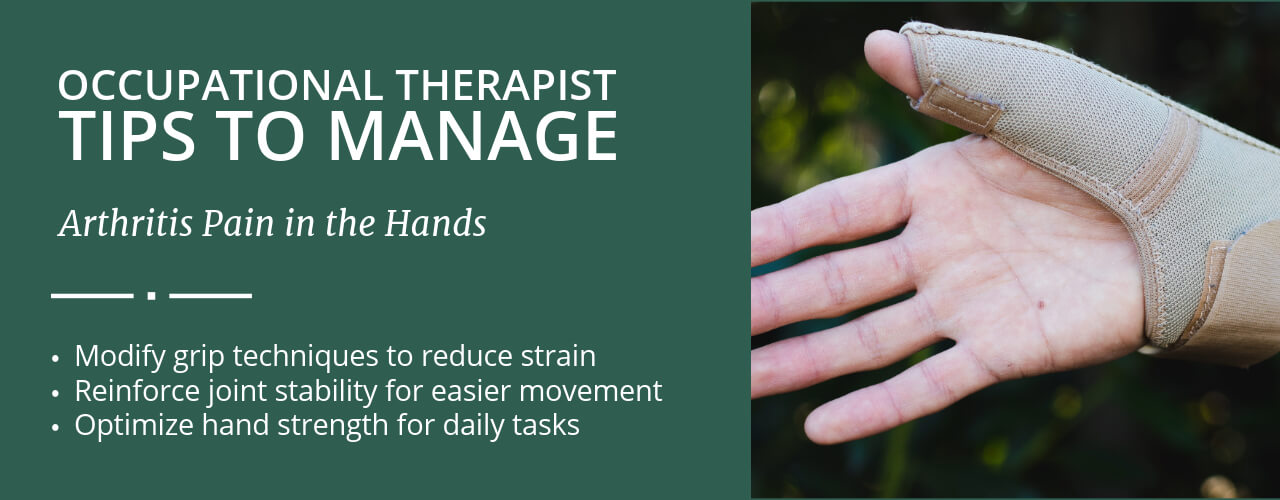
- Thumb or wrist splints support the joint and reduce inflammation
- Soft splints are often worn during daily tasks
- Rigid splints may be helpful during rest or sleep
4. Perform Gentle Range-of-Motion Exercises
Staying active keeps your joints from stiffening, so try some simple hand exercises. Remember, they should never cause sharp pain. Always ease into movement and stop if your discomfort increases.
- Gently bend and straighten your fingers several times a day
- Try tendon gliding exercises or finger spreads
5. Use Heat to Relieve Stiffness
Warmth improves circulation and soothes sore joints. These tips can help you make the most of this approach:
- Try a warm compress, a moist heating pad, or a warm water soak
- Apply heat for 10–15 minutes before activities
- Avoid high temperatures that could cause burns or skin irritation
6. Modify How You Hold and Lift Items
Small changes to your grip can reduce stress on your joints:
- Use the palms of your hands or forearms to lift items instead of fingers
- Slide objects along a surface instead of carrying them
- Use both hands to hold heavier objects like mugs or grocery bags
7. Protect Your Joints with Assistive Devices
There are many tools designed to make tasks easier for people with hand arthritis, such as:
- Button hooks, zipper pulls, and dressing aids
- Reachers and grabbers for lifting items off the floor
- Electric can openers and food processors for cooking
Our team can recommend and train you on how to use these tools effectively.
8. Plan Ahead to Avoid Overuse and Fatigue
Managing arthritis also means managing your energy. This can include:
- Scheduling demanding tasks at times when your hands feel strongest
- Preparing meals or chores in advance to avoid last-minute stress
- Using lists and routines to stay organized and reduce hand strain
9. Build Strength Safely with Supervised Exercises
We saved the best for last; this is one of the most effective occupational therapist tips for long-term hand arthritis management!
Stronger muscles support your joints and improve hand function, and our therapists can guide you through light resistance exercises using putty, hand grips, or resistance bands to build strength in your hands over time. However, performing these exercises under guidance is essential to avoid further joint damage, so schedule an appointment with our team to get started.
Take Control of Hand Arthritis with Professional Guidance
You don’t have to face arthritis alone. The occupational therapists at Teton Therapy are here to help you live more comfortably and maintain your independence. These nine tips are just the beginning. Our personalized care can make an even bigger impact.
Contact our Riverton, WY, Cheyenne, WY, and Lander, WY clinics today to get started.