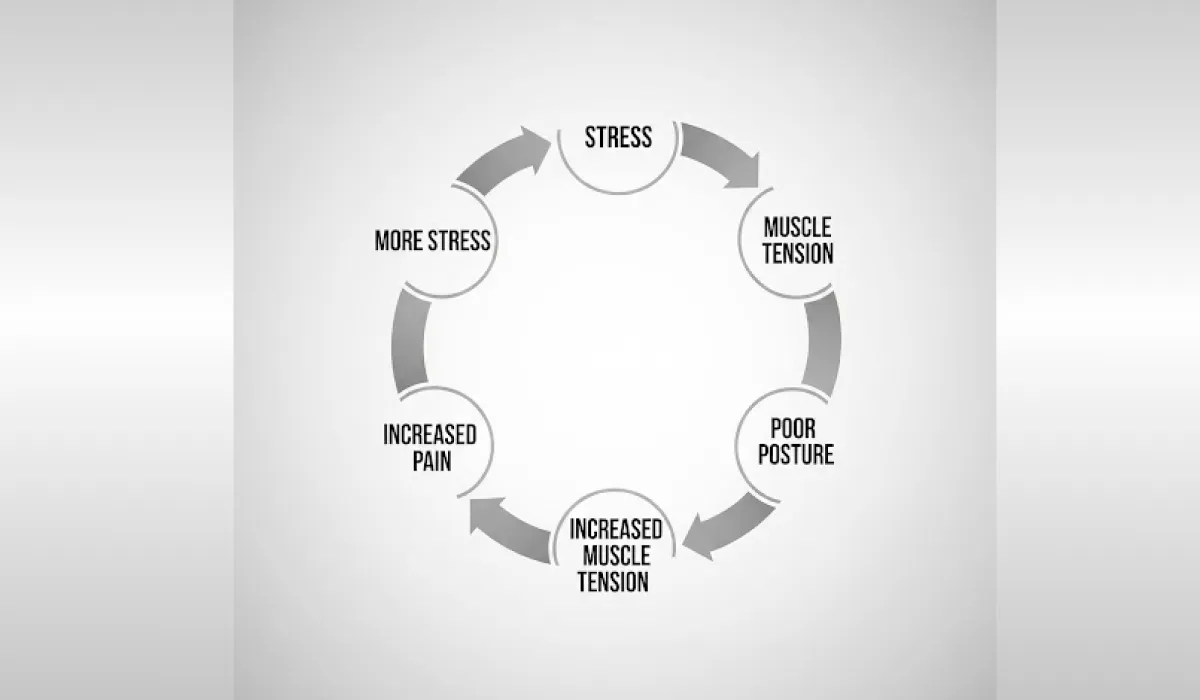

Have you ever noticed a pain in your shoulder simply while sitting at your computer at work? Shoulder pain is something I see every single week at my practice at Teton Therapy’s Lander clinic. While shoulder issues stem from a variety of factors, a surprising amount of them can actually occur as a result of poor posture and body positioning at work.
Whether you’re working from home or spending most of your day in an office, the way you sit, type, and use your mouse can gradually overload the shoulder joint, as well as other joints in the body.
In this guide, I will break down why desk work affects the shoulder and what you can do today to keep it strong, comfortable, and injury-free.
Understanding the Shoulder: “The Most Mobile Joint in Your Body”
Before we talk about solutions to this issue, it helps to understand the shoulder itself. It’s built for motion, not necessarily long periods at rest.
The shoulder relies on:
- The Scapula (Shoulder Blade)
Your shoulder blade is the foundation of your shoulder. It moves, tilts, and rotates with every arm motion. If it doesn’t move well, your shoulder can’t move well either. - The Rotator Cuff
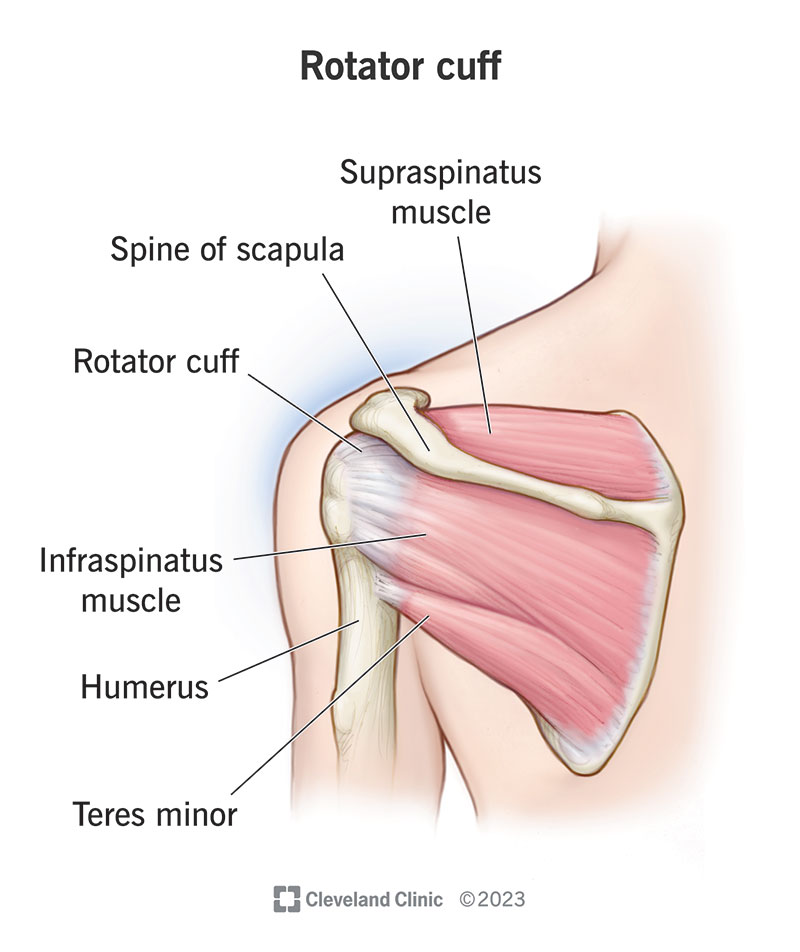
A group of four small muscles that keep the ball of your shoulder centered in its socket. They help lift and rotate your arm while keeping everything stable. - Upper Back Muscles That Support the Shoulder Blade
These muscles control the shoulder blade so your arm can move smoothly:
- Upper Trapezius: Helps lift your shoulder and rotate it upward for overhead motion.
- Middle Trapezius: Pulls your shoulder blade inward toward your spine, helping with posture.
- Lower Trapezius: Helps rotate and stabilize your shoulder blade for smooth overhead movement.
- Rhomboids (major and minor): Pull your shoulder blade back and stabilize it during movement.
- Upper Trapezius: Helps lift your shoulder and rotate it upward for overhead motion.
- Serratus Anterior
This muscle keeps your shoulder blade flat against your rib cage and helps it rotate upward. Weakness here can cause your shoulder blade to “wing” out, making movement harder. - The Core
Your core isn’t right at the shoulder, but it provides a stable base for your upper body. A strong core helps your shoulders move efficiently, whether you’re lifting, reaching, or carrying things.
When posture collapses, particularly when we lean forward at a desk, that foundation becomes unstable.
Why Desk Work can Lead to Shoulder Pain
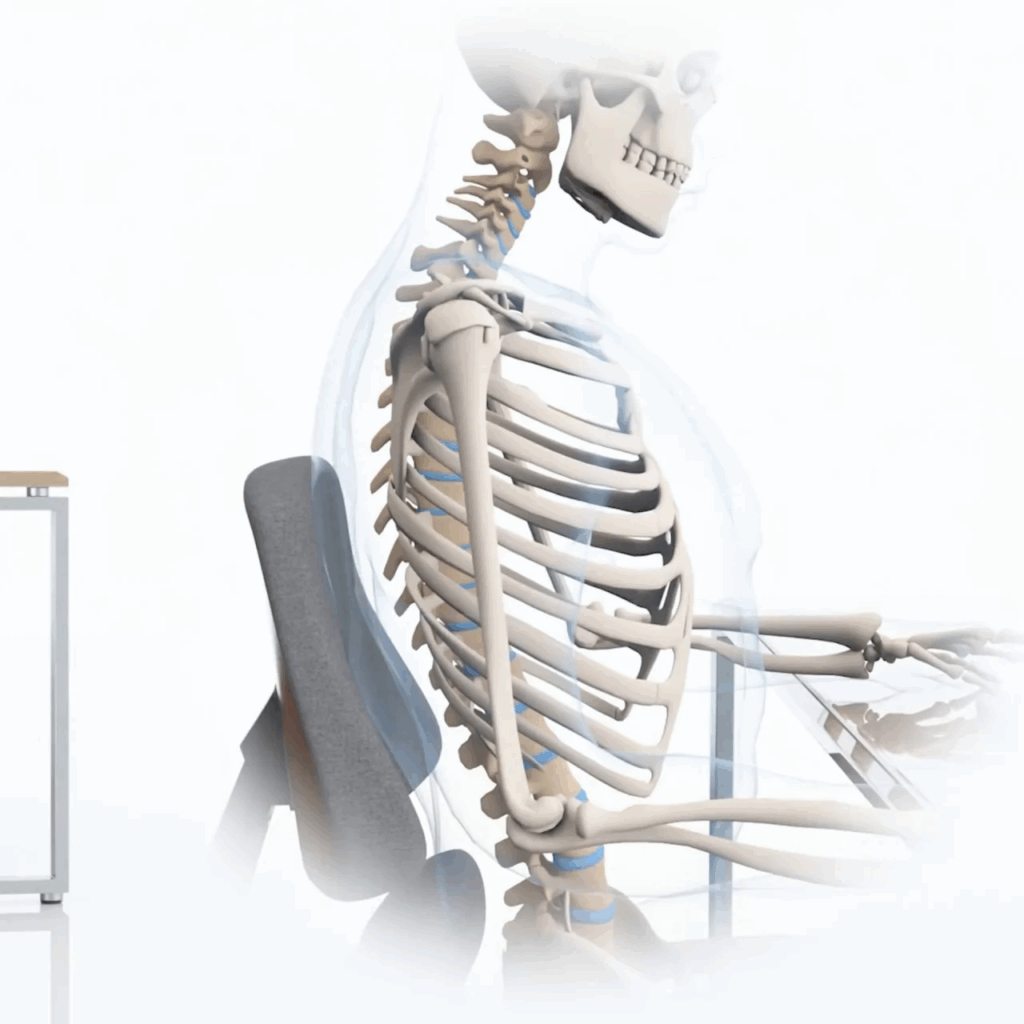
When you sit for long periods:
- The shoulders roll forward
- The head moves toward the screen
- The upper trapezius, chest, and front of the shoulder becomes overactive
- The rotator cuff must work harder to stabilize the arm
Over time, this can result in pinching, inflammation, and shoulder related discomfort such as:
- Tightness across the upper shoulders
- Sharp pain lifting the arm overhead
- Numbness/tingling down the arm
- Weakness when reaching behind you
Step 1: Set Up Your Workspace the Right Way
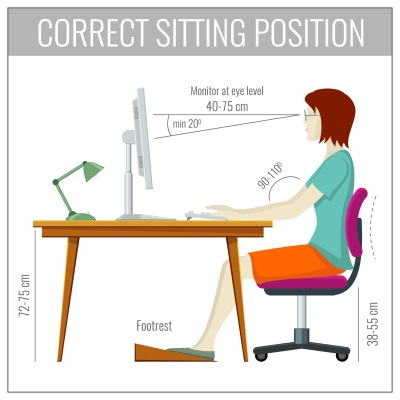
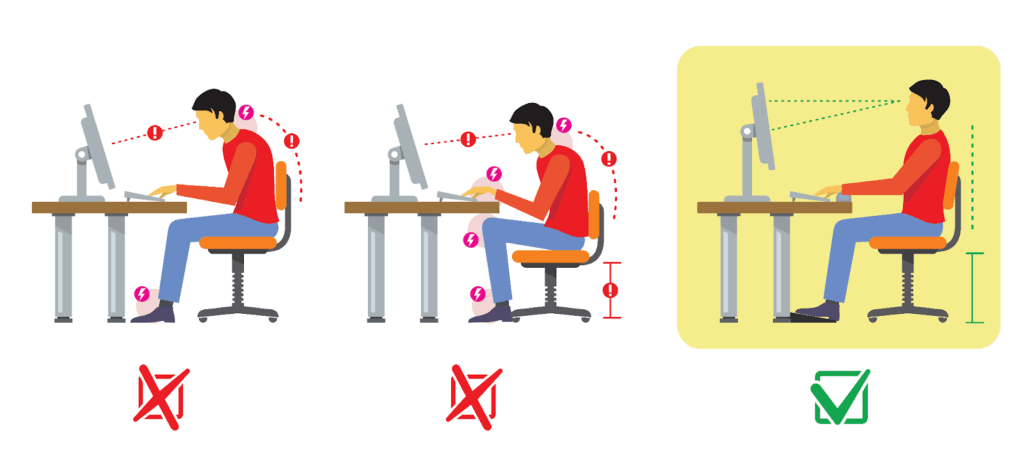
Here’s your shoulder-protective workstation checklist:
✔ Elbows at ~90 degrees (or slightly more)
✔ Keyboard close to your body
✔ Mouse aligned with your elbow (not far forward)
✔ Screen at eye level — no tilting your head too far upward/downward
✔ Feet supported and hips slightly higher than knees
What to Avoid
🚫 Reaching too far for the mouse
🚫 Hunching toward the screen
🚫 Working only on a laptop without accessories
Quick Fix for Laptop Users
- Add an external keyboard → keep elbows by your side
- Raise laptop → protect your neck and shoulders
- Rotate between seated and standing positions as able
Step 2: Practice Healthy Desk Posture
Try this mental cue every at least once every 60 minutes:
🛑 Pause → 🧍 Sit tall → 🎯 “Shoulders down and back, chin tucked”
Imagine a string lifting the top of your head up while your ribcage stays down — this opens space in the shoulder joint.
Step 3: Add Shoulder-Friendly Micro-Breaks
Motion nourishes your joints — especially the shoulder!
At least every 60 minutes:
- Stand and reset your posture
- Take 3–5 deep breaths: in through the nose and out through the mouth (this helps to relax over-active muscles that contribute to poor posture)
- Move the shoulder blades in some fashion
Favorite quick break exercises:
| Exercise | How-To | Why It Helps |
| Scapular Squeezes | Pinch shoulder blades gently together, 10x for 5 sec holds | Strengthens upper back, activates back muscles https://www.medbridge.com/care/home-exercise-program |
| Doorway Pec Stretch | Forearms on doorframe, lean forward for 60 sec | Opens chest, reduces shoulder rounding https://www.medbridge.com/care/home-exercise-program |
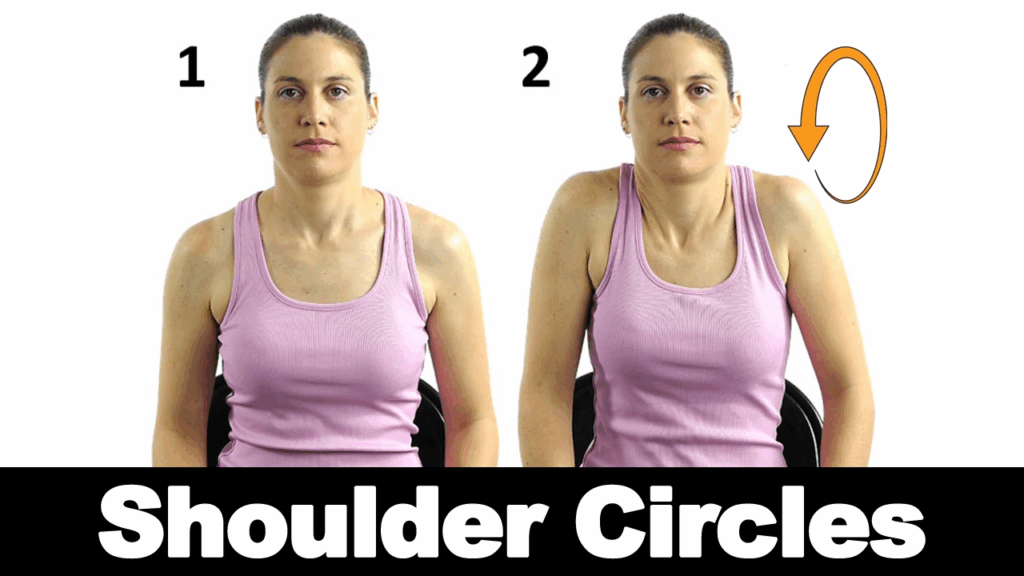
| Shoulder Blade Circles | Slow circles backward 10x | Activates shoulder stabilizers, decreases tension |
Step 4: Strengthen Your Shoulder — Just a Few Minutes a Day
Two OT-approved exercises:
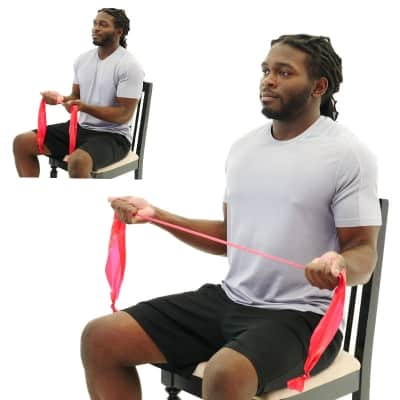
1️: External Rotation With Band*
Strengthens the rotator cuff — key to shoulder stability
*Bands are always available at Teton Therapy’s Lander and Riverton clinics!
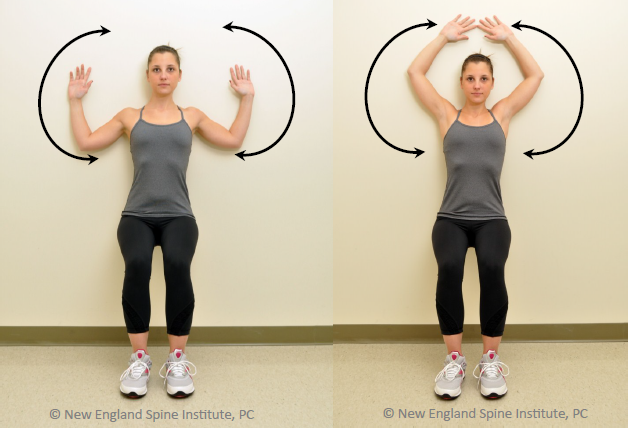
2️: Wall Angels
Improves posture and shoulder mechanics
| Tip | Explanation |
| Move slowly | Better activation, less compensation |
| No sharp pain | Discomfort = reduce motion |
Pick up some free used bands at Teton Therapy in Riverton or Lander!
When to Seek Help from an Occupational Therapist
You should seek immediate assistance from your OT if you experience:
- Pain that doesn’t improve in 1–2 weeks
- Pain or numbness/tingling in the hand throughout the day or at night
- General difficulty raising your arm
As occupational therapists, we can assess:
- Posture alignment
- Rotator cuff strength
- Scapular mechanics
- Workstation ergonomics
…and provide personalized strategies to prevent chronic discomfort and long-term injury.
Final Thought
Your shoulder is designed to move, not to be glued to a desk all day. Small changes such as better ergonomics, posture resets, and a few simple exercises throughout the day can make a huge difference in keeping your shoulder strong and pain-free throughout the work day. However, if your shoulder issue is more severe or has become chronic in nature, then more care and attention will be needed.
As an Occupational Therapist, I can customize these suggestions for your personal workspace or even review photos of your desk setup to offer ergonomic adjustments. If you feel your workplace set-up or posture is affecting your shoulder or any other joint, schedule your free consultation with one of Teton Therapy’s expert Occupational Therapists today!
Call or text:
In Lander – 307-332-2230
In Riverton – 307-857-7074